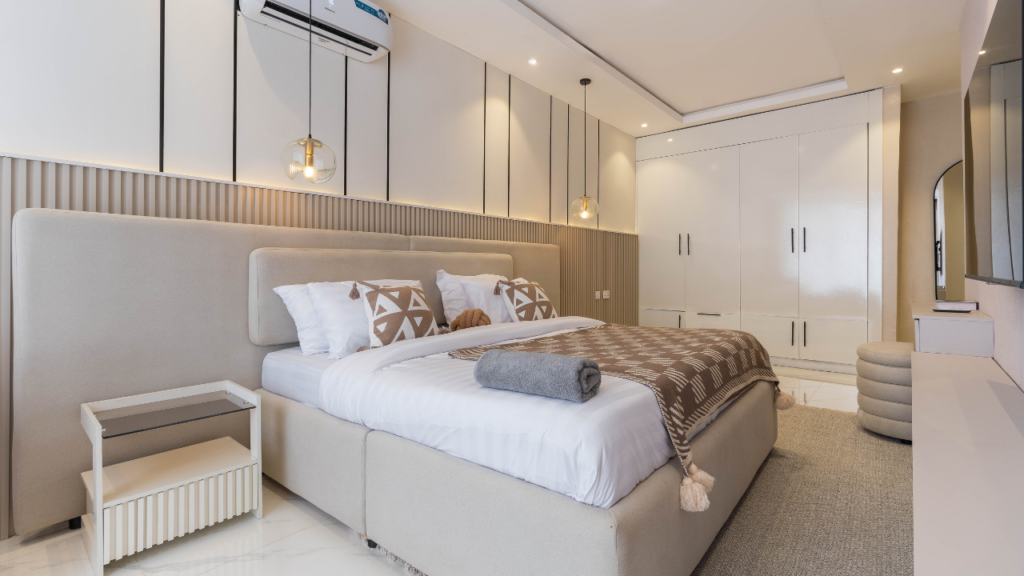
A calm bedroom isn’t just about wall color. It’s about atmosphere, layered textures, soft lighting, and thoughtful details that come together to create a space where you can truly unwind. If you love timeless design, soft tones, and effortless harmony, here are 10 ways to create the perfect calm neutral bedroom.
1. Choose a Soft Neutral Color Palette
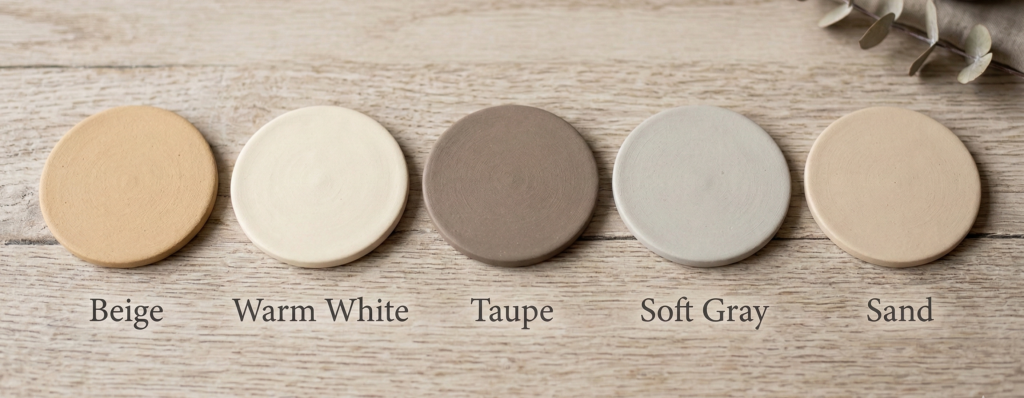
The foundation of a calm bedroom starts with color. Think shades of:
• Beige
• Warm white
• Taupe
• Soft gray
• Sand
Stick to 3–4 tones within the same temperature (preferably warm rather than cool) to keep the space cohesive and inviting. Smart & Styled Living Tip: Avoid stark white, it can feel harsh and disrupt the calm atmosphere.
2. Layer Textures Instead of Using Contrast
When you’re not relying on bold colors, texture becomes essential. Combine:
• Linen
• Cotton
• Wool
• Bouclé
• Natural wood
• Ceramics
Layering different materials adds depth and visual interest without overwhelming the space.

3. Minimize Visual Clutter
Calm bedroom = less noise, more breathing room.
• Keep nightstands simple – a lamp and a book are enough
• Use hidden storage solutions
• Avoid overcrowded open shelving
Every item should have a purpose and a place.
4. Invest in Quality Bedding
The bed is the focal point of the room. Layer it thoughtfully:
• Fitted sheet
• Light duvet
• Throw blanket
• 2–4 pillows in varying textures
A relaxed yet luxurious look creates that effortless hotel-inspired comfort.
5. Choose Soft, Warm Lighting
Avoid cool white lighting. Instead opt for:
• Warm bulbs (around 2700K)
• Table lamps instead of harsh overhead lighting
• Indirect or ambient light sources
Lighting dramatically affects how colors and textures feel in the space.

6. Add Natural Elements
Incorporate wood, rattan, stone, or a simple indoor plant. Natural materials bring warmth and life into the room while maintaining a serene aesthetic.
7. Maintain Symmetry
Symmetry naturally feels calming and balanced.
• Two bedside lamps
• Matching nightstands
• Centered artwork above the bed
Our minds are drawn to visual balance — and bedrooms should feel stable and harmonious.
8. Create a Subtle Focal Point
You don’t need bold colors to add character. Consider:
• An upholstered headboard
• A softly textured accent wall
• Large-scale minimalist artwork
A gentle focal point adds personality without disturbing the peaceful mood.
9. Limit Electronics
The bedroom is not an office.
Keep work, visible cables, and blinking lights out of sight. If possible, replace the television with books or calming décor. The room should support rest, not stimulation.
10. Think About Scent and Atmosphere
A calm space engages all the senses. Try:
• A subtle candle
• A lavender diffuser
• Fresh air and daily ventilation
Scent and air quality play a significant role in how relaxed you feel in your space.